

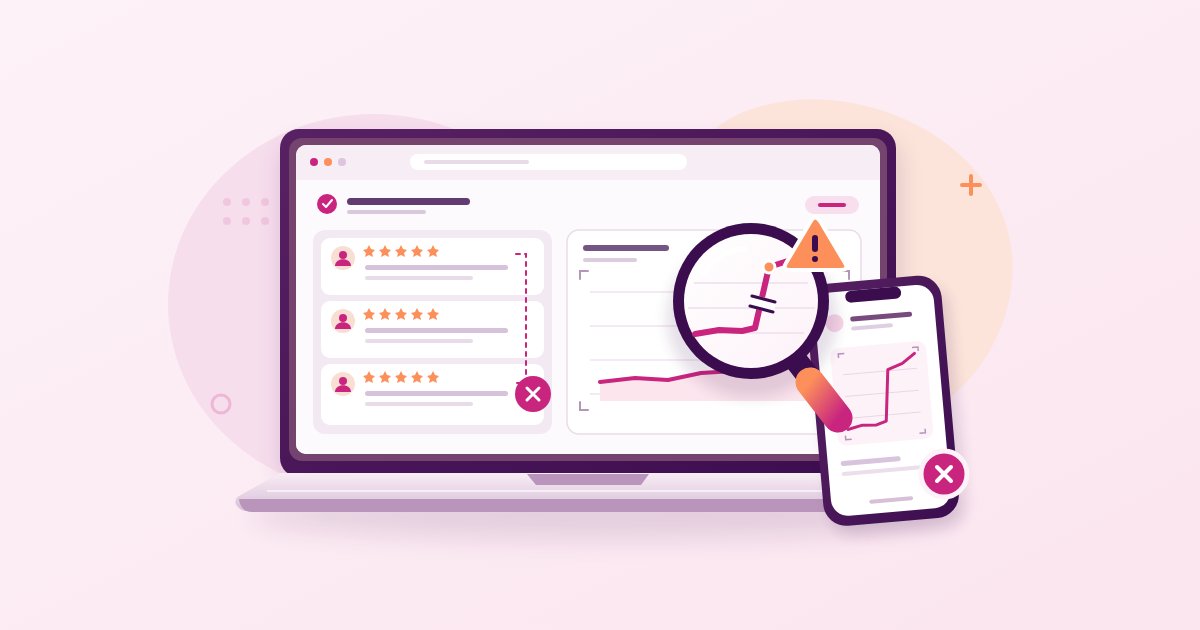
An Instagram followers booster should be judged by evidence you can check: specific customer reviews, dated results and a clear explanation of what caused the growth. A five-star rating or a screenshot showing thousands of new followers cannot establish whether those followers stayed, cared about the account or became customers. Before spending your Naira, use the checks below to separate a delivered number from a useful result.
Key Takeaways
- Read reviews for service details, timing and follow-up results; repeated praise alone tells you little.
- Check screenshot dates, account identity and metric labels before accepting a growth claim.
- Separate new follows from net growth, and growth during a campaign from growth caused by it.
- Set a spending limit and define the outcome you need before considering any service.
What Can an Instagram Followers Booster Actually Prove?
Separate Delivery, Retention and Business Value
A seller might demonstrate that an account’s follower count increased after an order. That supports a narrow delivery claim. It does not establish that the followers are interested Nigerians, potential customers or people likely to watch future posts.
For the practical side of this, see How to Grow an Instagram Account in Nigeria Without Buying Fake Followers.
Keep three questions separate when reviewing a testimonial:
- Delivery: Did the stated increase appear within the stated period?
- Retention: What happened to the count after the initial increase?
- Value: Did relevant conversations, viewing activity, enquiries or sales improve?
For an Abuja makeup artist, a review saying “500 delivered” answers a different question from “three people booked bridal consultations.” Even the second claim needs context: were those people referred by existing clients or attracted by a separate advert?
Read Promises Literally
Ask the provider to define terms such as “real,” “active,” “targeted” and “permanent.” A profile belonging to a person does not automatically represent someone interested in your work. A replacement promise does not prove that the original followers will remain.
Platform compliance is another separate issue. Meta’s explanation of its action against inauthentic Instagram activity describes detecting and removing fake engagement. A positive review cannot establish that a service is endorsed by Instagram or free of platform risk.
The common mistake is treating successful delivery as proof of everything else. Write down exactly what the evidence supports before deciding whether that outcome matters to you.
Read Reviews for Details You Can Check
Look Beyond the Star Average
Start with a manageable sample: five recent reviews, three critical reviews and two older reviews. If fewer are available, read them all. This is a quick screening method, not a statistically reliable assessment.
Once this part is in place, Free Instagram Followers: What Exchanges, Trials, and Generators Actually Deliver is a sensible next read.
Useful reviews explain what the customer ordered, when delivery happened, whether the count changed afterwards and how support handled a problem. “Amazing service, highly recommended” contains little you can verify, even if the reviewer is sincere.
Compare these illustrative examples:
- Weak evidence: “Best growth ever. Fast and reliable.”
- More useful evidence: “Ordered 300 followers on Monday. The increase appeared by Wednesday. Some disappeared the following week, and support explained the replacement conditions.”
The detailed review still needs checking. Specific language makes a claim testable; it does not make the claim true.
Check Patterns Without Accusing Reviewers
Search an unusual sentence from a testimonial in quotation marks. Finding identical wording attached to different identities or unrelated products gives you a reason to investigate. A common phrase appearing elsewhere proves much less.
Look for clusters of reviews posted close together, repeated sentence structures and reviewers whose visible histories contain only enthusiastic endorsements. Several signals together deserve more scrutiny than one odd detail.
A new account, imperfect English or a short review is not proof of dishonesty. Nigerian customers may write briefly because they are using a phone or simply have little to add. The mistake to avoid is judging authenticity by writing style instead of checking the claim.
Identify Incentives and Missing Customer Experiences
Ask What the Reviewer Received
A review may reflect a real order while still being influenced by a reward. Check whether the reviewer received free delivery, wallet credit, a discount or commission for referring new customers.
These arrangements do not automatically make the account false. They change how much weight you should place on praise, especially when the reviewer earns money only if you buy.
- Look for sponsorship, referral or affiliate disclosures near the recommendation.
- Check whether the reviewer used the same package being recommended.
- Ask whether the review was written before delivery, immediately afterwards or after a follow-up period.
A creator reviewing a complimentary premium package cannot directly establish what a customer should expect from the cheapest package.
Find Out What Happened After the Celebration
A WhatsApp message saying “They have arrived!” captures one moment. It says nothing about the following week, the customer’s enquiries or how a complaint was handled.
Look for later updates and read support replies to critical reviews. Does the reply address the specific complaint, explain the relevant terms and describe a resolution? A polite response is useful, but it is not proof that the issue was resolved.
Seller-selected testimonials show experiences the seller chose to display. Independent review pages can also contain manipulated material. Avoid treating either location as automatic proof; assess the underlying detail and acknowledge when follow-up evidence is missing.
Audit Growth Screenshots Before Trusting the Numbers
Check Identity, Dates and Metric Labels
A genuine screenshot can still support a misleading story. Cropping away the reporting period, switching accounts between images or showing views beside a follower-growth headline can change what the viewer assumes.
Before judging the size of the number, check:
- Account identity: Is there enough information to establish that both images concern the same account?
- Date range: Are you comparing equal periods with clear start and end dates?
- Metric: Does the screen show followers, follows, reach, views or another measure?
- Completeness: Are labels, explanations or comparison periods cropped out?
- Campaign context: What else happened during the period shown?
If a seller says “2,000 new followers” but the image shows 2,000 views, the evidence does not establish the advertised result. Do not let a large number distract you from its label.
Treat Visual Oddities as Questions
Misaligned digits, inconsistent fonts and blurred edges may justify requesting clearer evidence. They are not decisive proof of editing. Image compression, accessibility settings and different app versions can affect appearance.
Likewise, a polished image may have been altered without obvious visual clues. Your strongest checks concern whether the numbers, dates and explanation fit together.
For example, an Ibadan fashion seller might see a jump from 800 to 1,800 followers. If the “before” image is three months older, it cannot establish that a two-day campaign produced the entire increase. Ask for the relevant dates instead of debating whether the screenshot looks professional.

Do the Maths Behind the Growth Claim
Distinguish New Follows From Net Growth
Imagine an account starts with 1,200 followers, gains 500 follows and records 180 unfollows during the same period. Its net increase is 320, bringing the total to 1,520. A headline celebrating “500 added” leaves out an important part of the result.
Use two simple calculations when comparable figures are available:
- Net growth: Ending follower count minus starting follower count.
- Percentage growth: Net growth divided by starting follower count, multiplied by 100.
A rise from 100 to 200 followers is 100% growth, but the absolute increase is 100. Ask for both figures whenever a percentage carries the sales pitch.
Check What Else Could Explain the Increase
Suppose a comedian orders a service during the same week that a larger creator shares their skit. The follower increase happened during the order period, but the timing alone cannot show how much the service caused.
Ask whether the account also ran adverts, held a giveaway, collaborated with another creator or published an unusually successful post. Look at individual daily changes where available, rather than only two totals.
Do not label every spike artificial: an authentic mention can produce sudden interest. Equally, a smooth graph does not prove authentic growth. The mistake is trying to identify the source from the shape of the graph alone.
Request Stronger Evidence Without Exposing Private Data
Send One Specific Evidence Request
Instead of asking “Does this work?”, ask for evidence tied to the advertised claim. You can send this message:
“Please show the package used, the campaign dates, the starting and ending follower counts, and a later count after delivery. Were adverts, giveaways or collaborations running during that period? Please hide customer contact and payment details.”
If the seller claims Nigerian targeting, ask what supports that claim. Overall audience-location data may provide context, but it does not isolate the followers delivered by a particular order. Nigerian names or flags in biographies are also weak evidence of location.
Use a Recording as Supporting Evidence
A short continuous recording moving from the profile to the relevant reporting screen can provide more context than separate cropped images. Request visible dates and metric labels, with unrelated personal information concealed.
A recording can still be staged or edited. Its usefulness comes from connecting details that would otherwise be missing, not from being impossible to fake.
On metered data, request clear still images and written answers first. Download a recording only if an unresolved claim justifies it, and save the evidence locally so you can review it when power or connectivity is unreliable.
A provider may reasonably protect a customer’s privacy. Ask for anonymised evidence or a consenting example; do not demand passwords, private messages or customer phone numbers. If adequate evidence remains unavailable, classify the claim as unverified rather than automatically fraudulent.
Compare Claims Before Committing Your Budget
Evaluate the Evidence, Not the App Label
When comparing apps to boost Instagram followers, separate what each product actually does. Editing tools, scheduling tools, advertising tools and follower-delivery services solve different problems. A strong review for one function does not establish performance in another.
We looked at a related question in Boost Instagram Followers: Booster App Permissions, Costs, and Results.
Use this comparison checklist for each offer:
- “Instant delivery”: Request dated evidence; recognise that speed says little about audience interest.
- “Nigerian followers”: Ask how location is established; do not rely on profile names.
- “Permanent followers”: Read the exact replacement period and exclusions; distinguish replacements from retention.
- “More sales”: Ask how sales were attributed and what other promotion ran simultaneously.
Apply the same checks to any Instagram followers booster, including services sold through an SMM panel. Branding and attractive dashboards do not replace evidence.
Write a Spending Ceiling Before Reading Offers
Set a personal limit that protects essential business spending. For example, if you have ₦10,000 for promotion, you might reserve ₦3,000 for data and content preparation, then keep the remaining ₦7,000 uncommitted while evaluating options. These are illustrative allocations, not quoted service prices or predicted returns.
Do not deposit the full amount into a wallet merely to access a bonus. First establish what the money buys, whether unused credit can be withdrawn and what happens if delivery differs from the description.
A small order can limit financial exposure, but it cannot prove long-term value or remove account risk. Avoid testing an unsupported promise simply because the initial price looks disposable.
Keep Your Own Evidence and Decide What Counts as Success
Create a Simple Phone-Based Record
Before any promotion, save your starting follower count and the business outcome you care about. A Notes entry or Google Sheets file is enough. Use consistent reporting periods so that a busy weekend is not compared casually with a full month.
Record these details:
- Date, total spend and the exact advertised promise.
- Starting count, ending count and a later follow-up count.
- Posts, adverts, collaborations or giveaways running alongside the activity.
- Relevant enquiries, bookings or other outcomes, with attribution limits noted.
For a Port Harcourt cake business, enquiries should distinguish people asking for prices from people ordering within its delivery area. A follower increase and five unrelated messages should not automatically be recorded as five potential customers.
Set a Decision Rule in Advance
Write one sentence describing what would justify further spending. For example: “I will consider another campaign only after reviewing local enquiries and the explanation for any follower losses.”
If delivery disappoints, save the original offer, order details and correspondence, then request a specific remedy under the stated terms. Avoid paying another fee solely because someone promises it will fix the first result.
Do not keep spending to make an earlier purchase feel worthwhile. Your records should guide the next decision, even when the most useful conclusion is to stop.
Frequently Asked Questions
What Is the Best App to Boost Instagram Followers?
There is no universal best app to boost Instagram followers. Identify the job first: improving content, managing publishing, reaching people through adverts or evaluating audience response. Then compare evidence for that function, including total costs and limitations.
For follower-delivery claims, prioritise dated results and clear explanations over rankings based on referral commissions or seller-selected screenshots.
How Can I Tell Whether a Boost Instagram Followers App Review Is Fake?
You usually cannot establish that from one review. Check for copied wording, unclear reviewer incentives, missing order details and claims that contradict the supporting images. Several concerns justify withholding trust, but they do not prove who wrote the review.
Request specific evidence before paying. Treat an unanswered claim as unverified rather than repeating it as fact.
What Is the Best App to Get Instagram Followers for Free?
No app can guarantee a relevant audience at no cost. When searching for the best app to get Instagram followers for free, examine whether “free” requires watching adverts, completing tasks, referring friends or paying later.
Free content tools can help you make clearer posts, but their usefulness should be judged by what they help you produce. A screenshot of a large follower count does not establish a free, repeatable method.
Can Growth Screenshots Prove That Followers Are Real?
No. A screenshot may document a count or reporting metric at a particular moment. It cannot independently prove account authenticity, audience interest or future behaviour.
Use several forms of evidence together, including dated reporting, campaign context and relevant audience activity. Even then, avoid claiming certainty that the evidence cannot support.
How Can I Get Followers on Instagram Without Trusting Booster Reviews?
Publish content for a specific audience and measure the response yourself. An Enugu food vendor could test three posts answering delivery questions, then record profile visits, follows and relevant enquiries over a consistent period.
Repeat useful formats and compare results across several posts. This gives you direct evidence about your audience, although it does not guarantee follower growth.
Final Thoughts
Before choosing an Instagram followers booster, ask what each review and screenshot actually establishes. Check dates, labels, incentives and competing explanations, then compare the evidence with the outcome your business needs. When a claim remains unsupported, keep your money uncommitted. A larger follower count cannot replace useful content, customer trust or a reason to follow.
Related reading
- Get Free Instagram Followers Through Giveaways: What Works and What Backfires
- How to Get 10K Followers on Instagram in Nigeria: The Stage After Your First 1,000
- How to Get Followers on Instagram Through Searchable Names and Profile Keywords
Give your Instagram posts a push
If you want to speed this up, compare the Instagram options and prices first, then open a free account and start with the smallest package.